Asset management
EPOS Manager provides full visibility of headsets and speakerphones, offering an overview of both active and inactive devices.


EPOS Manager is a Software as a Service (SaaS) device management tool that empowers IT administrators to remotely monitor EPOS audio devices, update firmware, and configure headset settings with ease. The solution is built on Microsoft Azure cloud services. It leverages Azure managing the entire infrastructure, non-application software, and standard SaaS services. This includes critical functions such as data backup and encryption to ensure secure and reliable operations.
Asset management
EPOS Manager provides full visibility of headsets and speakerphones, offering an overview of both active and inactive devices.
Update management
EPOS Manager streamlines update management by maintaining the software version, pushing updates to selected or all devices, scheduling automated updates, and enabling forced updates for critical releases. It also provides access to update status for full oversight.
Configuration management
EPOS Manager simplifies configuration management by allowing the IT department to control all settings, customize configurations for selected employees to enhance user experience, and push settings to ensure compliance with regulatory requirements.
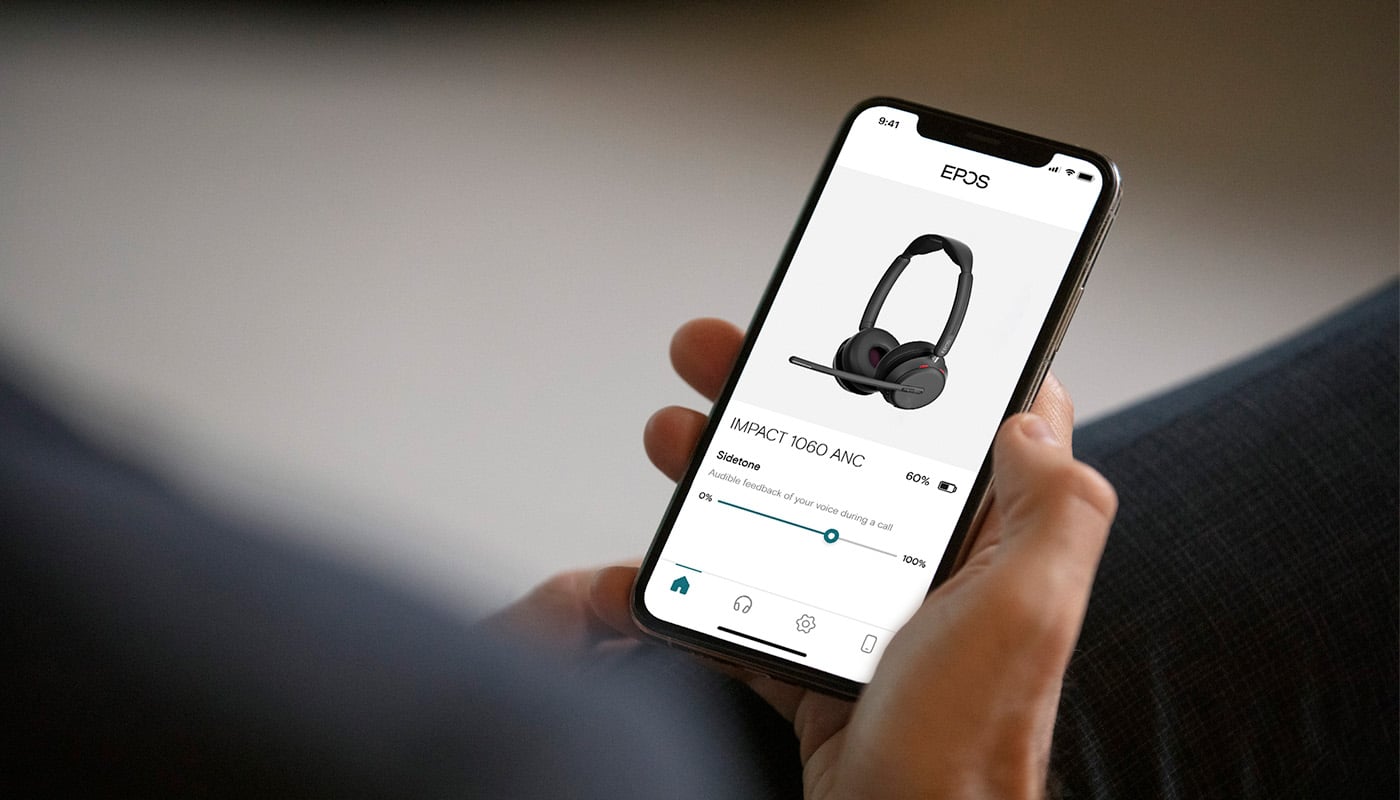
EPOS cooperates with UC management partners to simplify the device management of your headsets and speakerphones.
EPOS Manager works in conjunction with the EPOS Connect application, which enhances the user experience and simplifies device management by being easily installed and running on end-user computers. Together, they provide IT administrators with centralized control and flexibility.
To enhance security, the following measures are implemented
Secure network traffic
All communication between solution entities is protected using TLS 1.2 with 256-bit AES encryption.
Encrypted data storage
Data stored in the cloud by the IT administrator is encrypted with 256-bit AES encryption
Controlled user enrollment
Only end-users with a company-specific unique key file installed can be enrolled in the system.